The Erie Canal


So Mason is learning to play "The Erie Canal" on the piano. The kids all like it so they are singing it around the house. I told them that I have been to the Erie Canal. Of course they have no idea what the Erie Canal is. haha.
I introduced them to more verses of the song with this.
So I bought a book, "We were there at the opening of the Erie Canal" and decided today I would introduce it to the kids! Not a hard read, about two boys who work on the canal and then on the barges. So far, so good!
So what is the Erie Canal?
In the 1800s the main mode of transportation by land was usually a horse, a horse and wagon or perhaps oxen and wagon. It took quite a bit of time to transport things from city to city. And things such as lumber (which were really heavy) were hard to transport and only so much weight could be pulled by these animals.
Now of course goods came by ship as well. Many ships entered Boston or New York Harbor on the East Coast. Those goods would then be transported by land or by river. Transporting by river was much cheaper and much quicker. So what was the solution?
Build a canal.
A canal is a manmade waterway. So basically they're digging a small river, then they fill it with water and boats can travel at a quicker speed and carry heavier loads. In the case of the Erie Canal, they had large barges they would load with supplies. The barges would be pulled by mules. Now typically mules could not pull such a heavy weight as what was loaded on the barges (coal, wheat, lumber, etc), but pulling heavy loads in the water was easy for the mules. More about this later!

Ultimately if goods were shipped to New York Harbor they would be sent up the Hudson River to Albany. Once they built the canal it would allow the goods to then be shipped more than 350 miles to Buffalo in the west on the banks of one of the great lakes, Lake Erie.
The canal is a 363-mile waterway that connects the Great Lakes with the Atlantic Ocean via the Hudson River in upstate New York.

The midwest (Ohio, Illinois, Michigan, etc) were known at that time as the frontier--there was land and many men and women were anxious to settle it. However, obtaining necessary supplies proved difficult and when possible were extremely expensive. The building of the Erie Canal proved to drop prices by as much as 90-95%. It is said that a ton (2000 lbs) of wheat was shipped for approximately $100 dollars. That is the equivalent of $3,184 today! By the time the canal was completed that same ton of wheat could be shipped for $10! That is $318 today. Quite a change!
This enabled more people to obtain goods on the frontier. This also encouraged businesses and made many Americans wealthy. New York Harbor became the harbor of choice because it could bring so many goods to so many people. New York City became one of the largest and busiest cities in the United States.
Previously New Orleans had been the best (and easiest) route to get goods into the more central parts of the United States--the Erie Canal changed this and New York became the busiest port.

These videos teach some of the background on the canal.
Work began on the canal in 1817 and was completed in 1825. The canal was officially opened on October 26th 1826. I didn't realize we would be celebrating almost on the anniversary of the date the Erie Canal opened when I started this study!
Mules
Mules were used to pull boats on the Erie Canal from the day it opened in 1825. Mules were chosen over horses because they were more efficient, smarter, and could pull more steadily.
How it worked: Mules were attached to the boats by ropes and walked along a towpath next to the canal. Teams of mules worked in shifts and rested in stables on the boats when they weren't working.
Speed: Mules had to follow a speed limit of four miles per hour.
Folk songs: The use of mules on the Erie Canal inspired folk songs, such as Thomas A. Allen's “Low Bridge, Everybody Down”. (This is the one I included earlier).
Replacement: By 1917, mules were replaced by tugs and mechanical engines.
Let's talk about Mules
What is a mule? Basically a mule is a mix between a donkey and a horse. It is the offspring of a male donkey and a female horse.

How much weight can a mule pull?
American mules can carry up to 20% of their body weight (150-300 pounds) for 15 to 20 miles per day. They can carry more weight than a horse or don
A single canal boat usually had two teams of two or three mules. Each team could tow a boat weighing 140-tons (quick, do the math! 140 x 2,000*) for an average of eight hours a day, seven days a week. Like people, mules worked in shifts and would rotate teams every eight hours.
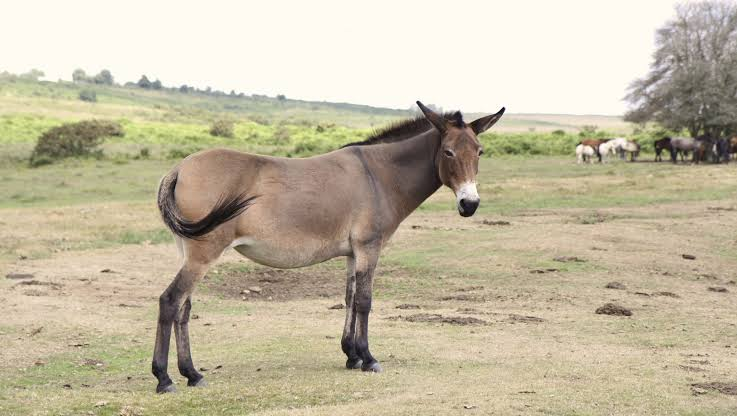
*280,000 pounds!
Erie Canal Brownies!
I found this and thought it was a fun piece of history and a chance to do some baking together in the kitchen!
In the 1930s, Oswego, New York native Oliver Wendell Petrie went to work as a cook on an oil tanker that traveled between Chicago and New York City using the Erie and Oswego canals. Thanks to Petrie’s family, the Museum archives contain a number of his personal items, including his recipe book.

You can read more of his life story by reading The Life and Times of a Canal Boat Cook by Museum Educator Derrick Pratt.
The short story is that Oliver Wendell Petrie was born into a large family in 1899. He married Helen Campney in 1929 and they had three chidlren together. Oliver wrote letters to his family and weknow a little about his experiences through those letters. He became a cook on board the oil tanker Empire State. He began work on his 38th birthday and prepared a variety of meals for a crew of 6 or 7 men. He made traditional soups and stews but also knew a few recipes for more exotic cuisine--chile con carne, Hungarian goulash and chop suey! His family said he didn't really cook at home and no one knows where he learned to make these foreign meals.
Oliver's family donated his cookbook and we have his Erie Canal Brownie Recipe! Head to the activities below to bake them up!
Church History
Ok I saved the best for last! :) Of course I wanted to include a little Church History and of course the Erie Canal is an awesome part of church history!
The Erie Canal passes many small towns and villages on its way from Albany, New York in the East to Buffalo in the west. At mile maker 235 is the small town of Palmyra.
Palmyra is the beginnings of our history. Joseph had his First Vision in a grove of trees near his home. He obtained the golden plates from the Angel Moroni at the Hill Cumorah. He printed the Book of Mormon at the E. B. Grandin building in town.

All of this happened right on the banks of the Erie Canal. The Canal was started in 1817 and completed in 1825. Think about what happened during those same nine years to the Smith family!
Joseph had the First Vision in 1820, the Angel Moroni visited him in September 1823, he visited the Hill Cumorah, met with Moroni another two times--and only a couple years later (in 1827) he actually received the plates and began translation. The book would be printed in 1829 and published in 1830. So many things, right here on the Erie Canal!
This would have been an exciting time in the Joseph Smith home. It is believed that Alvin (and possibly other Smith's) worked on the Erie Canal to make extra money. In the movie, Jospeh Smith: Prophet of the Restoration it shows Alvin working on the canal in 1823.

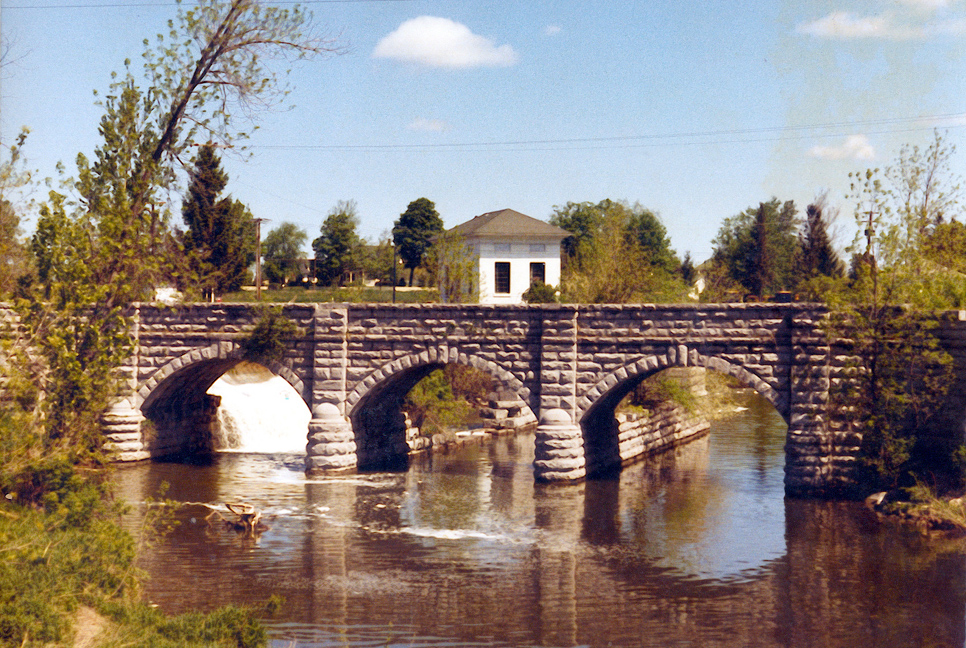
A "low-bridge" as they call it, in Palmyra.
Travel on the Canal
When saints from New York and other Eastern states wanted to gather with the saints in Kirtland, taking the Erie Canal would get them to Lake Erie and from there they could easier arrive at Kirtland.

The Faith of Lucy Mack Smith, the Prophet's Mother
The Erie Canal, which passed through Palmyra, is well known in Church history as well. It was the way Lucy Mack Smith, among others, brought her group of Saints to Kirtland.
After the Church was organized in April 1830, persecution stagnated Church growth in New York while the number of members increased in neighboring Ohio. By winter, a revelation commanded the Church members to “go to the Ohio” and gather with the Saints there (Doctrine and Covenants 37:1).
Lucy and several dozen Saints responded to the command of the revelation and traveled by boat on the Erie Canal to Lake Erie, then crossed the lake to Ohio. When they arrived at the banks of Lake Erie, however, the water was frozen with no foreseeable passageway. Many Saints on board the boat began to complain. Lucy rebuked them, asking, “Where is your faith? Where is your confidence in God? … Suppose that all the Saints here should raise their hearts in prayer to God that the way might be opened before us, how easy it would be for Him to cause the ice to break away so that in a moment’s time we could be on our journey.”
After testifying of the truthfulness of the Book of Mormon, Lucy pleaded with the Saints to pray for the ice to be broken up so they could continue their journey. In that moment, a noise “like bursting thunder” was heard and the ice parted, leaving a narrow passage for the boat that closed no sooner than the boat had passed.6 The Saints then held a prayer meeting to thank God for His deliverance.
ACTIVITIES
Erie Canal Word Search
Click here
Some Erie Canal Coloring Pages
How to draw a Donkey!
Erie Canal Brownies!
Click here to download the lesson plan, ingredient cards, and recipe. Enjoy!

Comments